For many families in Tamil Nadu, a meal is not a meal without rice. If someone at home is watching their blood sugar, a common question is: should we eat raw rice or boiled rice?
The short answer
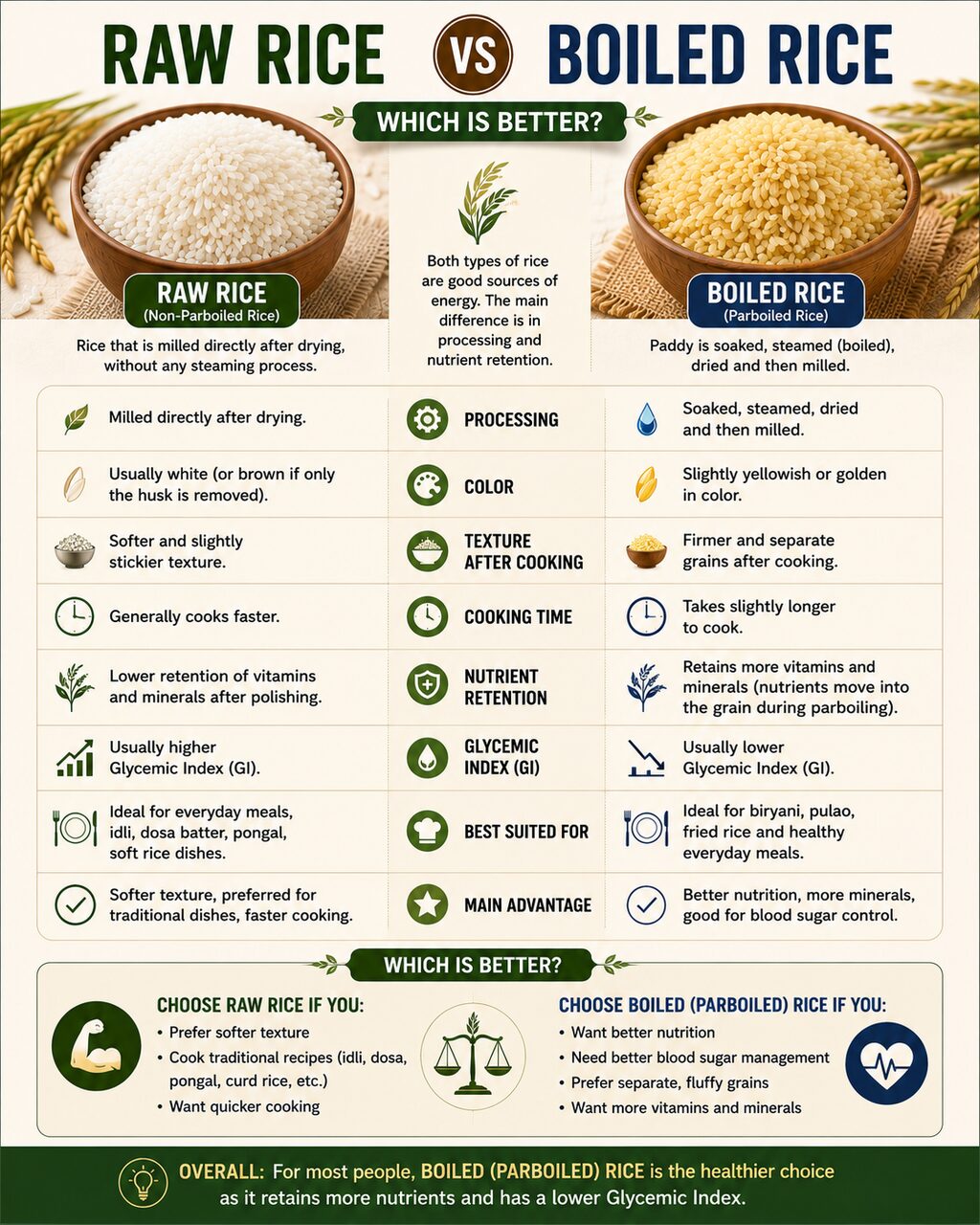
Both are good sources of energy. The main difference is in processing and nutrient retention. For most people, boiled (parboiled) rice is the healthier everyday choice, because it keeps more nutrients and usually has a lower glycemic index (GI).
Why boiled rice is usually better for blood sugar
- Lower glycemic index: parboiling changes the starch structure, so it is digested more slowly.
- More resistant starch: this behaves a bit like fiber and may help blood sugar control and digestion.
- More nutrients: B vitamins, calcium and potassium are retained during parboiling.
When raw rice still makes sense
Raw rice is softer and cooks faster. It is preferred for traditional dishes such as idli, dosa, pongal and curd rice, and by people who like soft rice. Enjoy it, just in sensible portions.
Choose raw rice if you…
- Prefer a softer texture
- Cook traditional recipes (idli, dosa, pongal, curd rice)
- Want quicker cooking
Choose boiled rice if you…
- Want better nutrition
- Need better blood sugar management
- Prefer separate, fluffy grains
- Want more vitamins and minerals
Smart habits for a balanced rice plate
- Fill half the plate with vegetables (poriyal, kootu, keerai) and add dal or sambar for protein.
- Watch the portion: one cup of cooked rice per meal is a good starting point.
- Cooked rice that is cooled and reheated has more resistant starch.
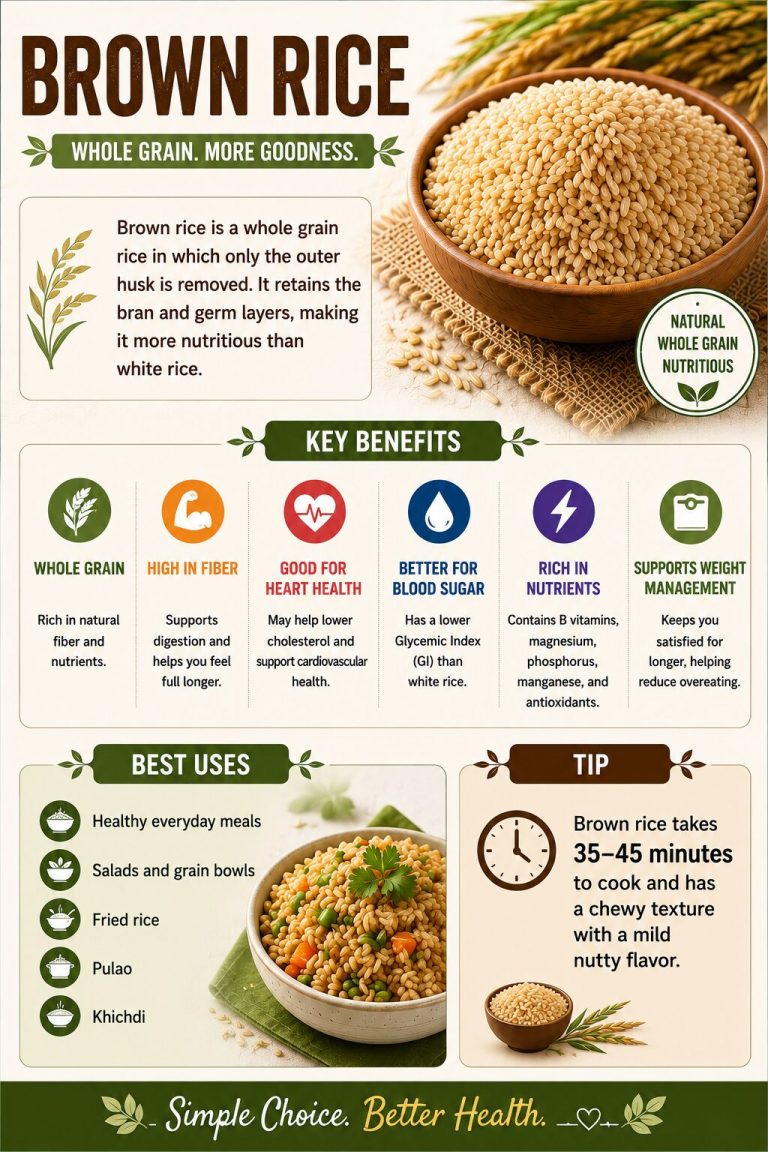
- Try mixing in brown rice or traditional red rice a few times a week.
This article is general information, not medical advice. If you have diabetes, please follow your doctor’s or dietitian’s guidance on portions.
Shop boiled rice · Shop traditional and organic rice
Order rice online from ArisiMart, delivered across Chennai from our shops in Virugambakkam, Nerkundram and West Mambalam. Call 98844 56440 for bulk orders.