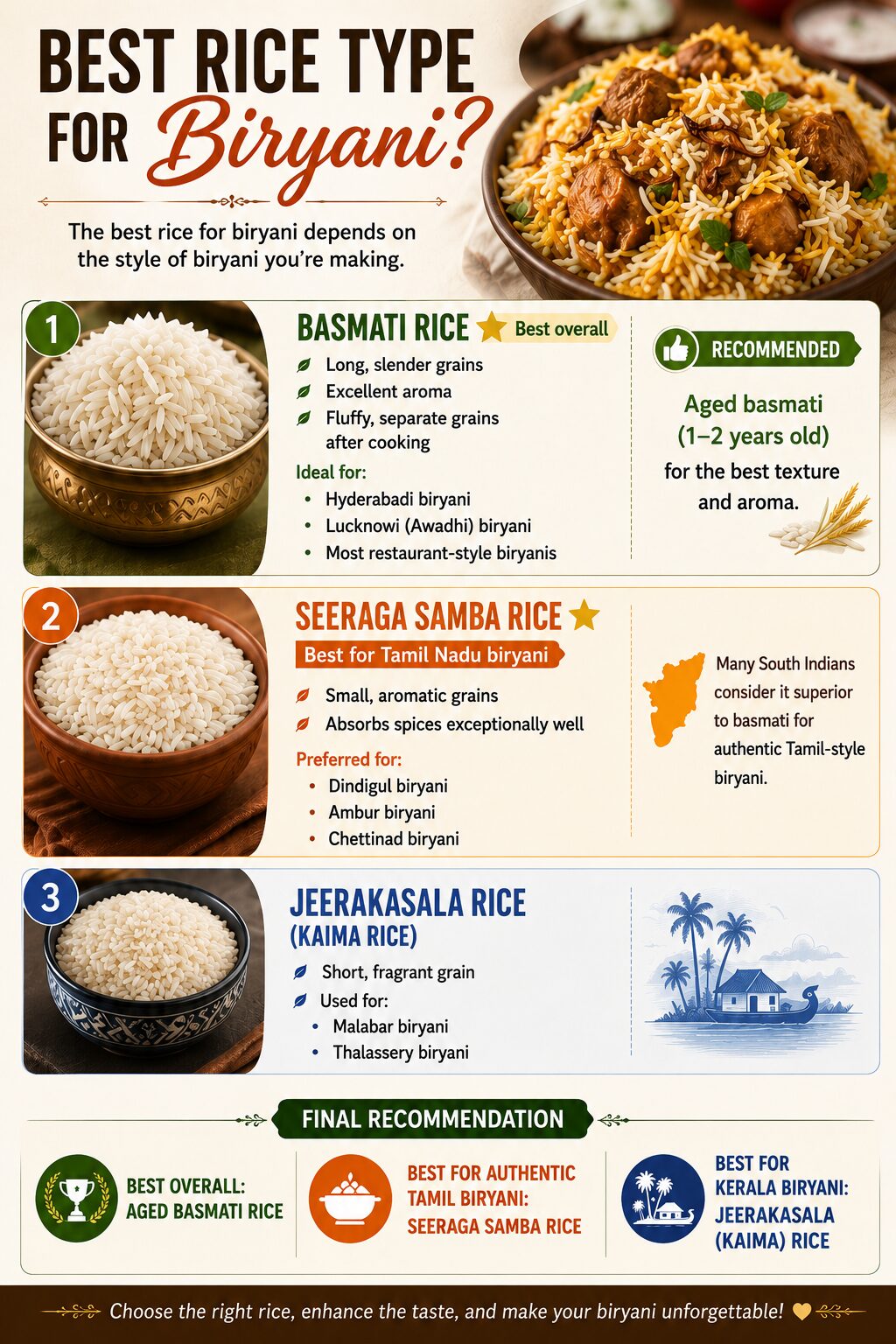
Ask ten biryani lovers in Chennai which rice is best and you may get three different answers, and all of them can be right. The best rice for biryani depends on the style of biryani you are making.
1. Basmati rice: best overall
Long, slender grains, a strong aroma and fluffy, separate grains after cooking. Aged basmati (1–2 years old) gives the best texture and fragrance because aged grains absorb water evenly and do not break.
Ideal for: Hyderabadi biryani, Lucknowi (Awadhi) biryani and most restaurant-style biryanis. Shop basmati rice.
2. Seeraga samba rice: best for Tamil Nadu biryani
Small, aromatic grains that absorb masala exceptionally well. Many South Indians consider it better than basmati for authentic Tamil-style biryani.
Preferred for: Dindigul biryani, Ambur biryani and Chettinad biryani.
3. Jeerakasala (kaima) rice: best for Kerala biryani
A short, fragrant grain from Kerala, used for Malabar biryani and Thalassery biryani.
Quick recommendation
| Biryani style | Best rice |
|---|---|
| Hyderabadi, Lucknowi, restaurant-style | Aged basmati |
| Dindigul, Ambur, Chettinad | Seeraga samba |
| Malabar, Thalassery | Jeerakasala (kaima) |
Tips for perfect biryani rice
- Rinse gently 2–3 times; do not rub the grains, or they break.
- Soak basmati for 30 minutes and seeraga samba for 15–20 minutes.
- Parboil basmati in plenty of salted water to about 70% done before layering (dum style).
- Seeraga samba is usually cooked in measured water with the masala: about 1½ cups of water per cup.
- Let the biryani rest on dum for 10 minutes before opening.
Cooking for a crowd?
For weddings, functions and hotels, we supply basmati in 25–30 kg bags with B2B pricing. Call 98844 56440.
Order rice online from ArisiMart, delivered across Chennai from our shops in Virugambakkam, Nerkundram and West Mambalam. Call 98844 56440 for bulk orders.