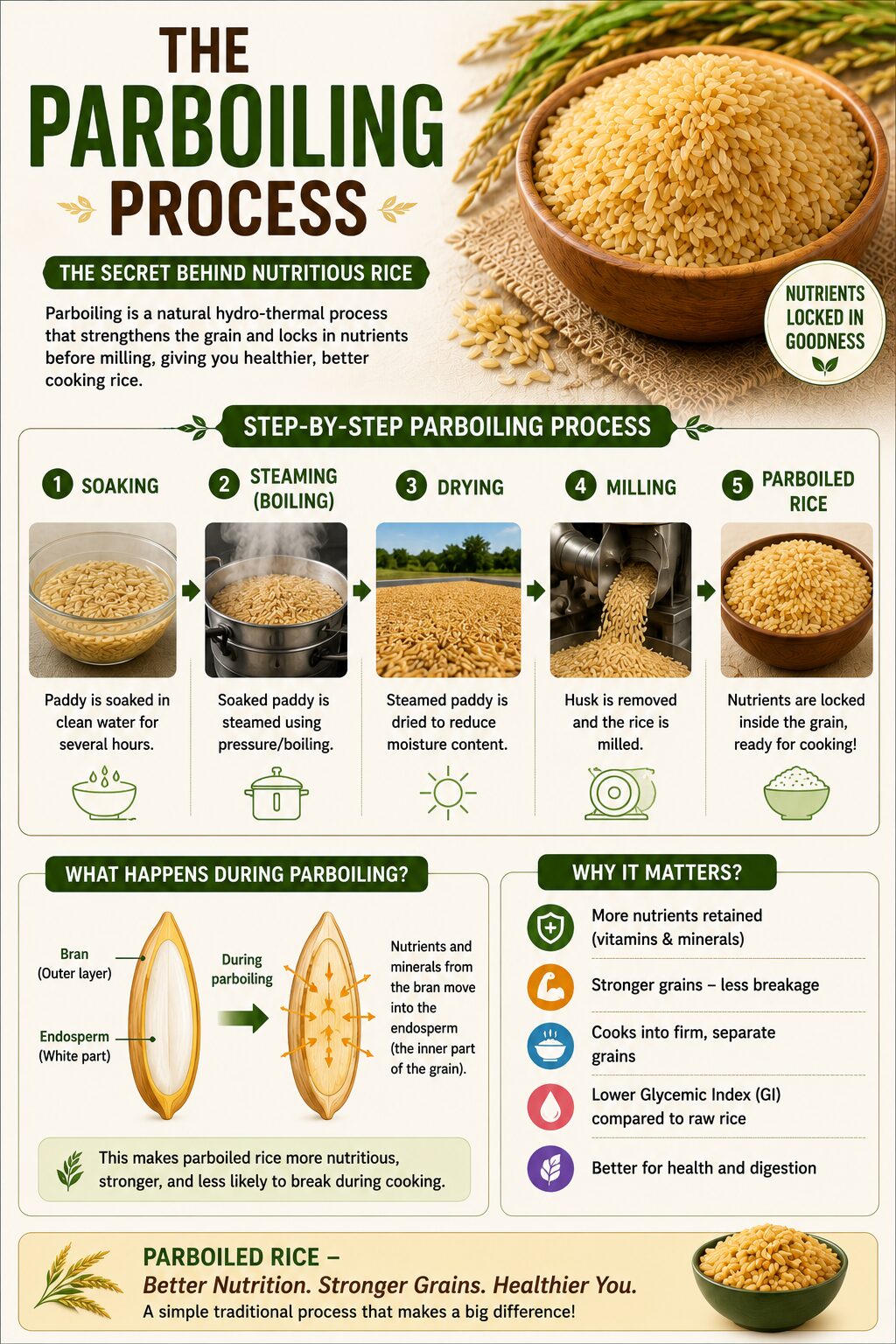
Parboiling is a natural hydro-thermal process (water plus heat) done to paddy before milling. It is the secret behind boiled rice: more nutritious, stronger grains that cook firm and separate.
Step-by-step parboiling
- Soaking: paddy is soaked in clean water for several hours, often warm water to speed it up.
- Steaming (boiling): the soaked paddy is steamed under heat or pressure.
- Drying: the steamed paddy is dried to bring down the moisture so it can be milled and stored.
- Milling: the husk is removed and the rice is milled.
- Parboiled rice: nutrients are locked inside the grain, ready for cooking.
What happens inside the grain?
A rice grain has an outer bran layer and a white inner part (the endosperm). During soaking and steaming, water-soluble vitamins and minerals move from the bran into the endosperm. So even after the bran is milled away, more of these nutrients stay in the rice. Steaming also gelatinises the starch, which hardens the grain.
Why it matters
- More nutrients retained: especially B vitamins such as thiamine (B1).
- Stronger grains: less breakage during milling and cooking.
- Firm, separate grains: ideal for meals, variety rice and biryani.
- Lower glycemic index compared with polished raw rice.
- Better storage: parboiled rice is less prone to insects.
Is home parboiling possible?
Traditionally, many Tamil villages parboiled paddy at home in large vessels. Today it is done in rice mills with controlled soaking and steaming, which gives even quality. Every rice bag we sell is checked for quality before it reaches you.
Ready to try it? Shop boiled (parboiled) rice, or compare in boiled rice vs raw rice.
Order rice online from ArisiMart, delivered across Chennai from our shops in Virugambakkam, Nerkundram and West Mambalam. Call 98844 56440 for bulk orders.