Raw rice, called pachai arisi in Tamil, is the rice behind festival pongal, temple-style payasam and the rice flour for murukku and kozhukattai. Here is what “raw” really means.
Raw rice meaning
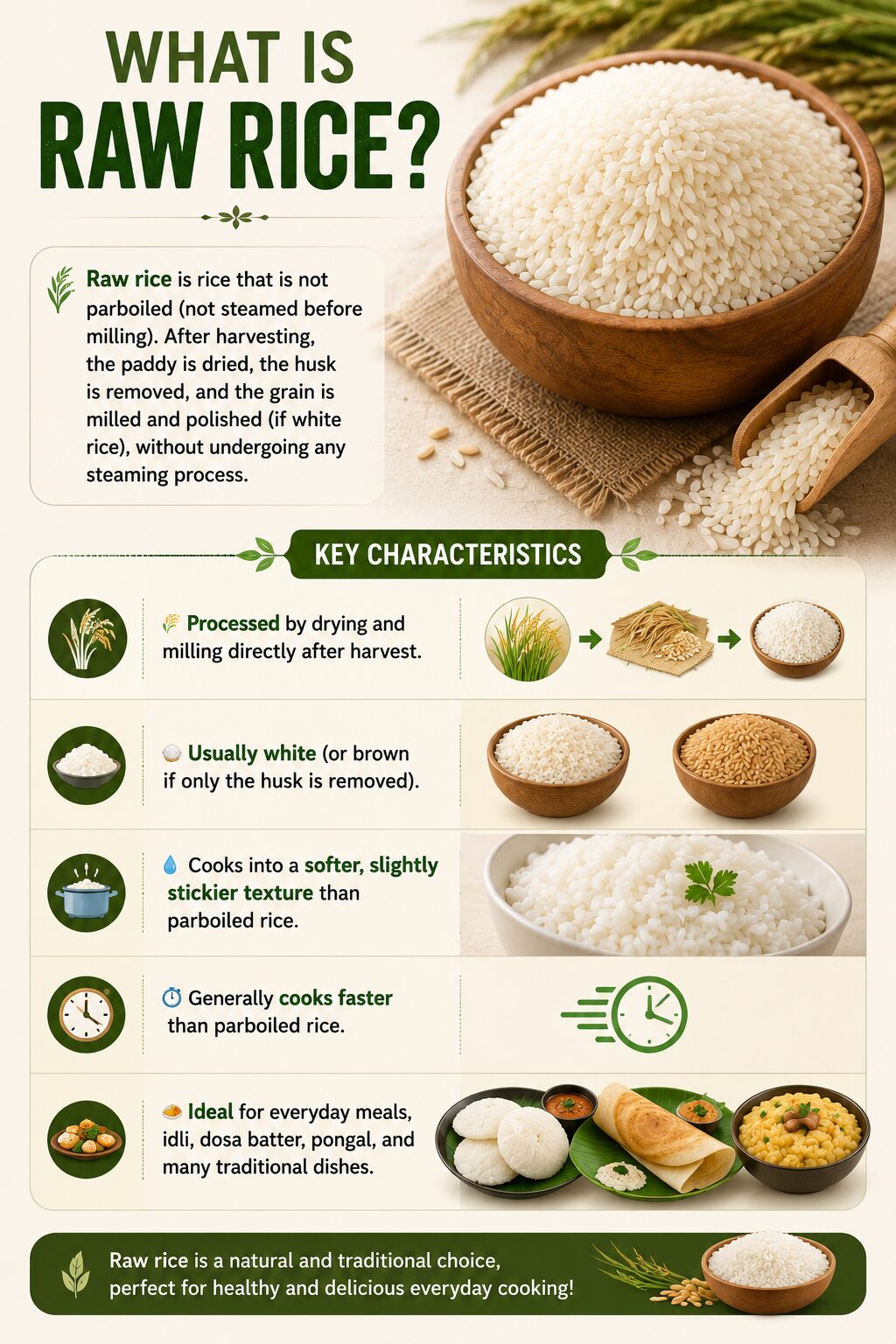
Raw rice is rice that is not parboiled. After harvest, the paddy is simply dried, the husk is removed and the grain is milled and polished. There is no soaking or steaming before milling, unlike boiled rice. “Raw” does not mean uncooked rice you eat raw; you cook it like any rice.
Key characteristics
- Processed simply: dried and milled directly after harvest.
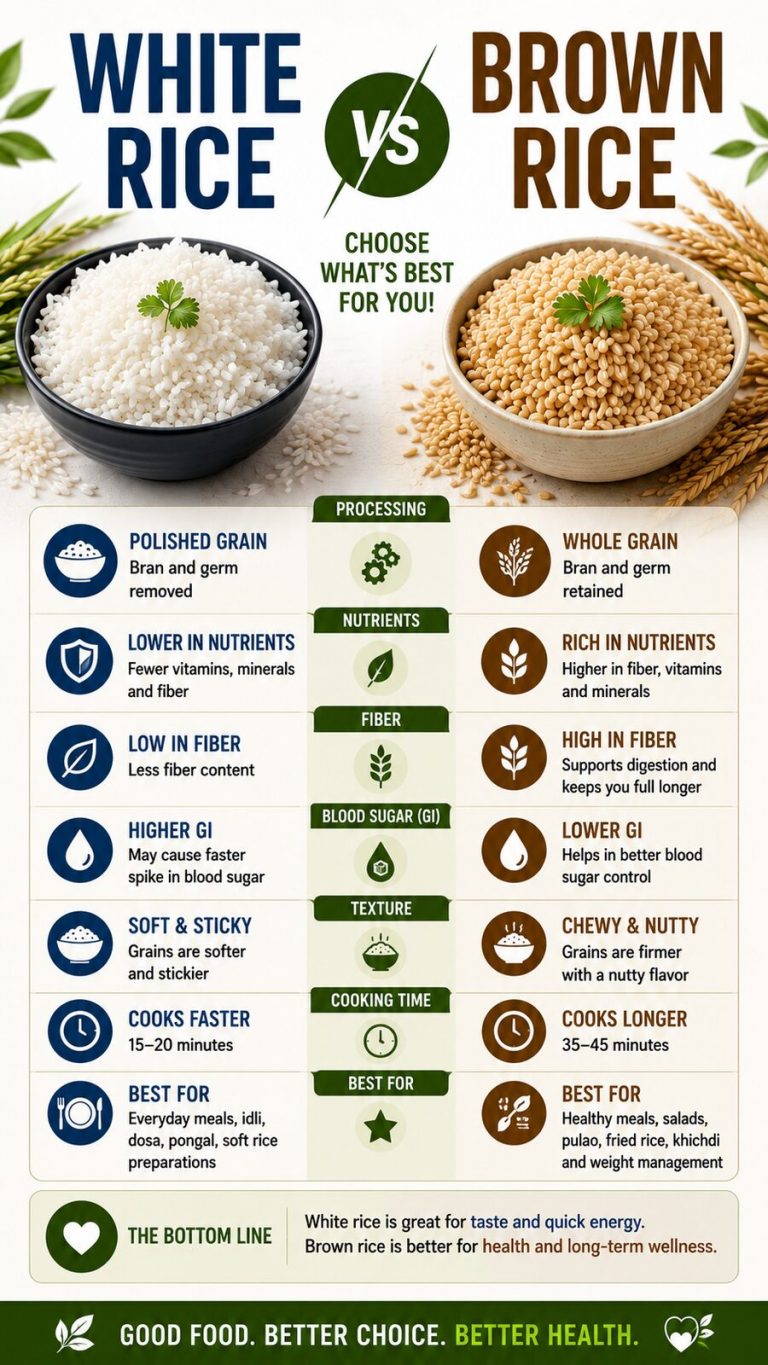
- Colour: usually white; brown if only the husk is removed (that is brown rice).
- Texture: softer and slightly stickier than parboiled rice, which is exactly what pongal and payasam need.
- Cooking: cooks faster: 2–3 whistles in a pressure cooker, or 15–20 minutes in a pot.
Best uses of raw rice
- Pongal: ven pongal and sakkarai pongal need soft, mashable rice.
- Payasam and kheer: raw rice releases starch that thickens the milk.
- Homemade rice flour: for idiyappam, kozhukattai, murukku, seedai and adhirasam.
- Dosa batter: many families add some raw rice to idly rice for crispier dosas.
- Soft variety rice: coconut rice and lemon rice for people who like softer grains.
Popular raw rice types
Ponni raw rice, sona masoori raw rice and premium aged raw rice are common in Chennai homes. For Deepavali sweets and Pongal, many families buy a 5 or 10 kg pack. Shop raw rice.
Tips for cooking raw rice
- Rinse 2–3 times until the water runs clear, so it is less sticky.
- For plain rice, use about 2 cups of water per cup; for pongal, 3–4 cups.
- Rest it covered for 5 minutes after cooking.
FAQ
Raw rice or boiled rice for daily meals?
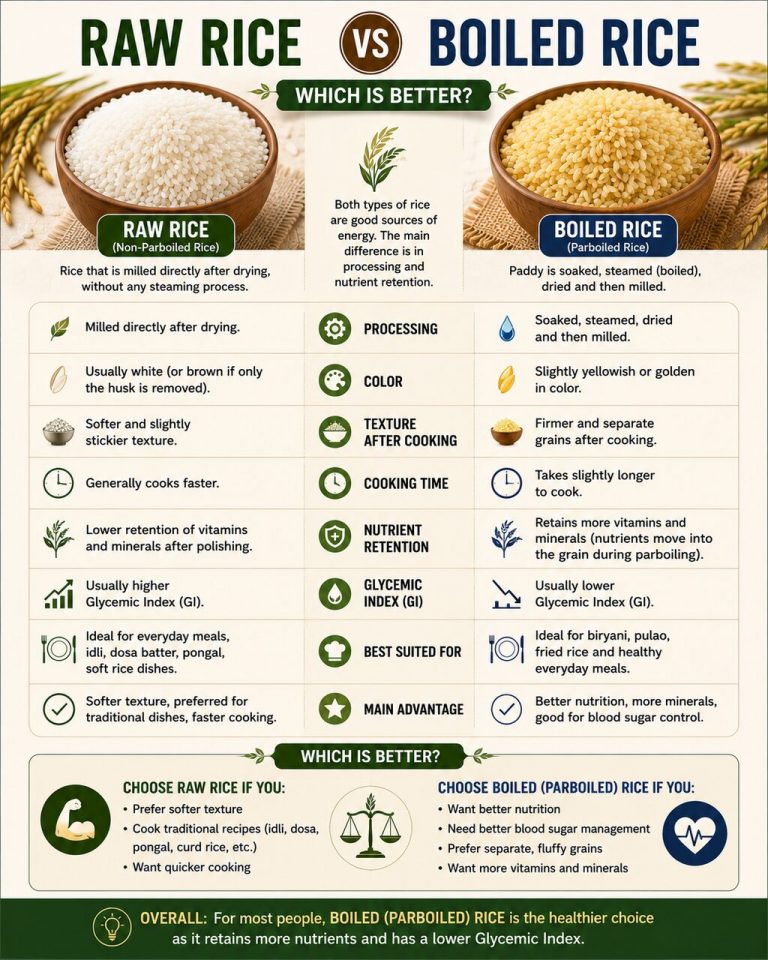
Most Tamil homes use boiled rice daily and keep raw rice for special dishes. See boiled rice vs raw rice.
Order rice online from ArisiMart, delivered across Chennai from our shops in Virugambakkam, Nerkundram and West Mambalam. Call 98844 56440 for bulk orders.